HOW TO GET OVER PROCASTINATION -- EAT THAT FROG
Today, we are discussing something different from regular medical topic. We are in middle of a global crisis. This covid-19 situation has not only affected our health system but the world is going through economic recession. People are losing jobs, lot of people have gone down the poverty line. Among all this we as medical students have lost track of our future. Most of us have lost the rhythm of studying and many of us are lost in the uncertainity of the present situation.
Many of us procastinate a lot. In this blogpost I have summarized key points from a book named Eat that frog by Brian Tracy.This is a wonderful book about avoiding procastination and planning out ones priorities to successfully accomplish ones goal. This book talks about how to set our priorities, how to effectively plan out our everyday tasks and how to creatively procastinate.
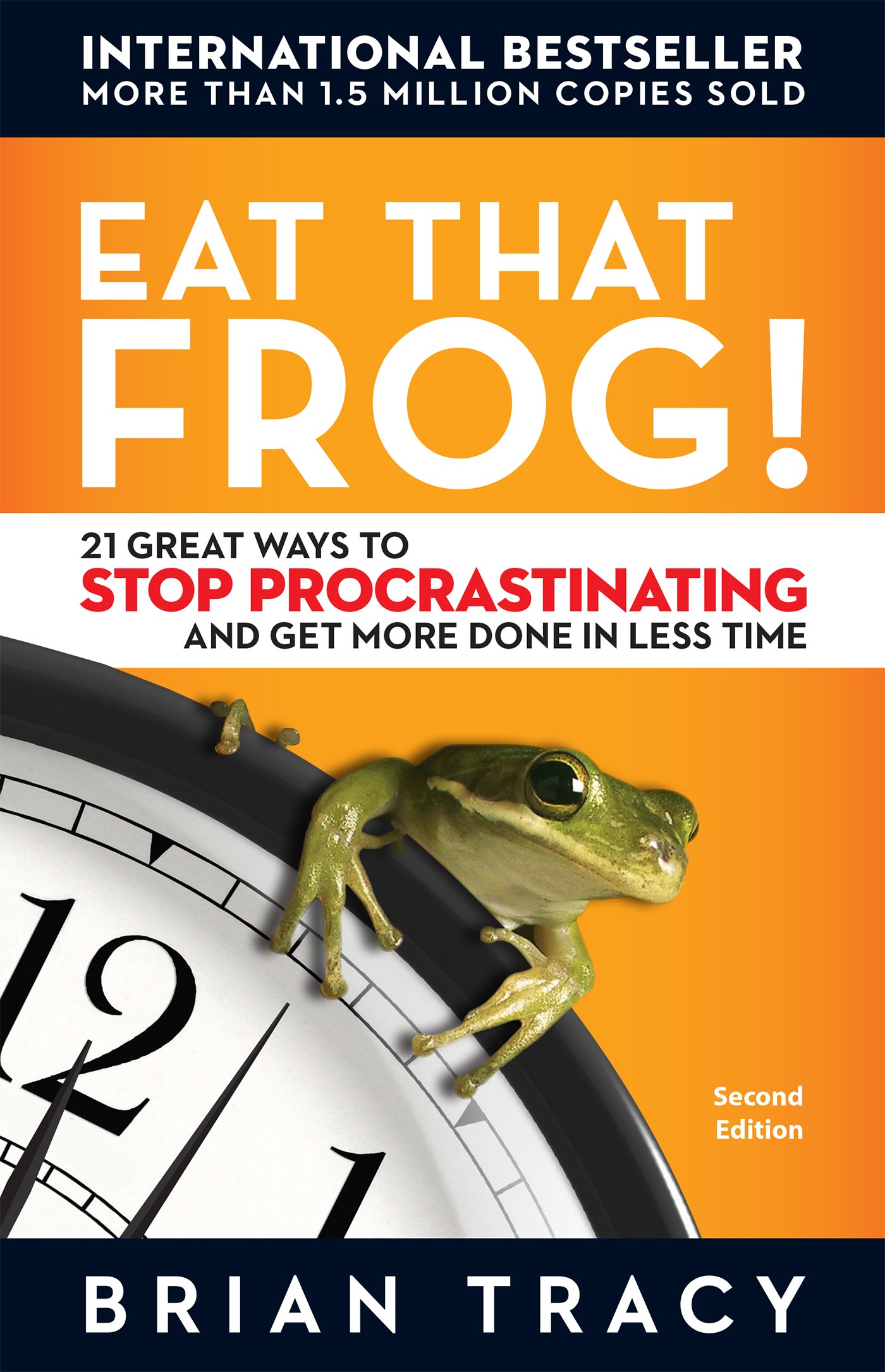
21 great ways
1.Set the table: Decide exactly what you want. Clarity is essential.
Write out your goals and objectives before you begin;

2. Plan every day in advance: Think on paper. Every minute you
spend in planning can save you five or ten minutes in execution;
3. Apply the 80/20 Rule to everything: Twenty percent of your
activities will account for eighty percent of your results. Always
concentrate your efforts on that top twenty percent;
4. Consider the consequences: Your most important tasks and
priorities are those that can have the most serious consequences,
positive or negative, on your life or work. Focus on these above all
else;
5. Practice the ABCDE Method continually: Before you begin work
on a list of tasks, take a few moments to organize them by value
and priority so you can be sure of working on your most
important activities:
6. Focus on key result areas: Identify and determine those results
that you absolutely, positively have to get to do your job well, and
work on them all day long;
7. The Law of Forced Efficiency: There is never enough time to do
everything but there is always enough time to do the most
important things. What are they?
8. Prepare thoroughly before you begin: Proper prior preparation
prevents poor performance;
9. Do your homework: The more knowledgeable and skilled you
become at your key tasks, the faster you start them and the sooner
you get them done;
10. Leverage your special talents: Determine exactly what it is that
you are very good at doing, or could be very good at, and throw
your whole heart into doing those specific things very, very well:
11. Identify your key constraints: Determine the bottlenecks or
chokepoints, internally or externally, that set the speed at which you achieve your most important goals and focus on alleviating
them;
12. Take it one oil barrel at a time: You can accomplish the biggest
and most complicated job if you just complete it one step at a time;
13. Put the pressure on yourself: Imagine that you have to leave
town for a month and work as if you had to get all your major
tasks completed before you left;
14. Maximize your personal powers: Identify your periods of highest
mental and physical energy each day and structure your most
important and demanding tasks around these times. Get lots of
rest so you can perform at your best;
15. Motivate yourself into action: Be your own cheerleader. Look for
the good in every situation. Focus on the solution rather than the
problem. Always be optimistic and constructive;
16. Practice creative procrastination: Since you can’t do everything,
you must learn to deliberately put off those tasks that are of low
value so that you have enough time to do the few things that
really count;
17. Do the most difficult task first: Begin each day with your most
difficult task, the one task that can make the greatest contribution
to yourself and your work, and resolve to stay at it until it is
complete:
18. Slice and dice the task: Break large, complex tasks down into bite
sized pieces and then just do one small part of the task to get
started;
19. Create large chunks of time: Organize your days around large
blocks of time where you can concentrate for extended periods on
your most important tasks;
20. Develop a sense of urgency: Make a habit of moving fast on your
key tasks. Become known as a person who does things quickly
and well;
21. Single handle every task: Set clear priorities, start immediately
on your most important task and then work without stopping
until the job is 100% complete. This is the real key to high
performance and maximum personal productivity.

👍👏👏
ReplyDelete